Monday, June 17, 2013

(25) Due Meditazioni di Osho: No-Mind e Dinamica // Two Osho Meditations: No-Mind and Dynamic

English Version Below


Spesso mi viene chiesto delle meditazioni di Osho. In questo post cercherò di spiegare brevemente due importanti meditazioni di Osho che ho potuto praticare in India: No-Mind e Dinamica.

La meditazione No-Mind è divisa in tre fasi. La prima dura quaranta minuti durante i quali si pronunciano suoni senza senso, per esempio si mima un linguaggio che non si conosce.

E' particolarmente importante evitare parole di ogni linguaggio conosciuto. La mente funziona tramite parole che sono come anelli di una catena, ogni parola conduce ad un'altra in un circolo vizioso sul quale abbiamo poco controllo. Quando si presenta un pensiero od un'idea, cerchiamo la sua causa (volgendoci al passato) e guardiamo ai suoi potenziali effetti e soluzioni (futuro). Questo processo è automatico e quasi completamente inutile poichè viene ripetuto identicamente più e più volte, più di quanto in verità necessario per le risolvere le questioni pratiche della vita quotidiana.

Inoltre, concentrentando la nostra introspezione sulle parole spostiamo la nostra attenzione dall'origine emotiva - che si trova nell'inconscio - ad un problema superficiale che pensiamo essere quello reale. Per esempio se sei spesso preoccupato di ammalarti, sprecherai molte delle tue energie e del tuo tempo - più del necessario - nel pensare al come evitare ogni potenziale causa di malattia. Facendo così ci si concentra sugli effetti del problema e ci si dimentica dell'origine inconscia, che potrebbe avere un significato diverso.

Ma se al contrario cominci pronunciando suoni a caso, la tua mente non può più funzionare in quest'ottica di causa ed effetto che ti fa anche allontanare dal presente. Si può invece diventare consapevoli della reale fonta inconscia - che è in cambiamento continuo - delle emozioni e dei pensieri e rimanere nel presente.

Spezzare questo schema verbale serve anche a diventare consapevoli delle emozioni che la mente non consente normalmente di esprimere in parole - e neanche in pensieri - poichè culturalmente o socialmente inaccettabili. Ma le emozioni sono costituite di energia che in qualche modo ha bisogno di essere espressa. E come fa la mente a far fronte a questa energia? Invece di riconoscere il reale nocciolo emotivo - che è inaccettabile - la mente si convince dell'esistenza di emozioni fittizie che sono invece tollerabili. Quindi a causa dei condizionamenti sociali e culturali la mente mente a se stessa - cercando di proteggersi - e molta energia e attenzione è data a problemi fittizzi che tengono lontani dalla verità interiore.

Quindi il gibbersih è un modo per diventare consapevoli della propria verità e penetrare un livello più profondo del proprio essere. Dopo questa fase ci si può sedere silenziosamente per venti minuti, durante i quali puoi finalmente diventare come 'un osservatore sulla collina". Puoi finalmente godere di una serenità più profonda poichè il tuo essere autentico è stato concesso di esprimersi ed è ora più calmo. Nell'ultima parte si lascia il corpo cadere all'indietro sul pavimento senza alcuno sforzo o controllo e questa posizione è mantenuta per altri venti minuti.

Secondo Osho in quest'ultima fase si può entrare nel trascendentale dopo che ci si è liberati della mente attiva (prima fase) e di quella passiva (seconda fase).

La seconda meditazione è la meditazione Dinamica. Questa pratica è da fare al mattino presto. Bisogna tenere gli occhi chiusi - usando una benda se necessario - ed è divisa in cinque parti .

Si comincia respirando forte ed in maniera caotica ed irregolare. Va fatto tramite il naso fino a diventare letteralmente un tuttuno con il proprio respiro. La mente è come una guardia che perlustra tutte le vie per l'inconscio. Respiro e mente sono profondamente interconnesse. Quindi con questo tipo di respiro si confonde la mente e si può facilmente accedere l'inconscio.

Una volta che si è in contatto con l'inconscio si può esprimere quello che ci è stato insegnato a reprimere e nascondere tramite la mente. Dopodichè si può lasciar sfogare tutto: movimenti corporei, urla, piani, salti, balli, canti, risate,... Esternalmente si diventa pazzi ma all'interno si continua ad osservare tutto, cioè si diventa consapevolmente matti.

La cosa più importante è cercare di non interferire ma lasciare tutto fluire verso l'esterno spontaneamente. All'inizio recitare un pò può essere necessario. Siamo diventati così falsi che non possiamo più fare niente di autentico. Siamo diventati la nostra maschera - le nostre false risate e pianti - e da lì bisogna cominciare ma solo all'inizio.

Un altro aspetto cruciale è usare l'intero corpo per esprimersi poichè è lì che le emozioni represse si sono 'trasferite' e quindi è cruciale cominciare lì.

Durante la terza fase bisogna saltare con le mani alzate e urlare il mantra 'hoo', che è stato tradizionalmente usato dai Sufi ed è particolarmente utile per la catarsi. Mentre, secondo Osho, il famoso mantra 'aum' può essere usato solo una volta che le repressioni sono state tirate fuori.

Poi nella parte successiva bisogna fermarsi e congelare il corpo per dieci minuti. In questo modo puoi consentire all'energia di muoversi in un flusso verso l'alto nel tuo essere. E negli ultimi dieci minuti puoi ballare per celebrare la meditazione - che è impegnativa da un punto di vista fisico - e finalmente rilassarti.

Queste sono state due delle più significative meditazioni di Osho che ho potuto sperimentare - No-Mind privatamente con un amico mentre lavoravavamo in una fattoria nell'India rurale e la meditazione dinamica all'ashram di Osho a Pune.

English Version 

Often people ask me about the Osho meditations. In the following post I will try to briefly explain two important Osho Meditations that I could practice in India: No-Mind and Dynamic.

No-Mind meditation is divided into three stages. The first one lasts forty minutes during which you utter nonsense sounds, e.g. you mimic a language you do not know.

Avoiding words of any familiar language is particularly important. The mind works in terms of words that work like rings of a chain, each one leading to another in a vicious circle on which we have little control. We have a thought/idea and we seek its cause (turning to past) and look at its potential effects and solutions (turning to future). This process is automatical and almost completely useless because we repeat it in the same way over and over, much more than actually required to deal with the real issues of daily life.

Furthermore, by focusing our introspection on words we divert our attention from the real emotional source - which lies in the unconscious - to a superficial issue that we deem to be the real one at stake. For example if you are overworried about falling ill, you will waste much energy and time - more than necessary - in thinking about how to avoid all the potential causes of disease. By doing so you focus on the effects of the problem and you forget about the unconscious drive, which may have a different meaning.

But if you start by saying non-sense sounds, your mind cannot work in this logic of cause-effect anymore that drifting you away from the present. On the contrary, you can become aware of the unconscious real origin - which is in constant change - of emotions and thoughts and stay in the present.

By breaking up this verbal pattern you can also become aware of emotions that the mind does not normally allow to be expressed in words - and even in thoughts - because socially or culturally unacceptable. The emotions are made of energy that somehow need to be expressed. What does the mind usually do to cope with this energy? Instead of recognising the real unacceptable emotional core, the mind convinces herself of the existence of a fake and tolerable emotion. Therefore, because of social and cultural conditioning, the mind lies to herself - in an attempt of selfdefense - and much energy and attention is given to fake problems that keep you away from your internal truth.

Hence, gibberish is a way to become aware of your own truth and penetrate into a deeper level of your being. After this phase you can sit silently for twenty minutes, where you can finally become like a 'watcher on the hill'. You can enjoy a deeper serenity because your authentic being has finally been allowed to express and is now calmer. In the last stage, you let your body fall back to the ground without any effort or control and you keep this position for another twenty minutes.

According to Osho this last phase is to enter into the transcendental after getting rid of the active mind (first stage) and passive mind (second stage).

The second meditation I will talk about is Dynamic Meditation. This practice has to be done very early in the morning. You need to keep your eyes shut - using a blindfold if necessary - and is divided into five stages.

You start by chaotically and irregularly hard breathing - through the nose - until you literally become the breathing. The mind is like a guard that patrols all the ways to the unconscious. Breath and mind are deeply interlinked. Hence with this kind of breath you bewilder your guard and can easily access the unconscious.

Once you are in touch with the unconscious you can express what you have been taught to repress and hide through the mind. Then you can let everything go out: body movements, yells, cries, jumps, dance, sing, laugh,... Externally you become mad but inside you keep watching everything, i.e. you become consciously crazy.

The most important thing is to do not interfere but let everything flow out spontanously. To begin a little acting may be necessary. We have become so fake that we cannot do anything authentic. We have become our mask - our false laughter and cries - and from there we should probably start, but only at the beginning.

Another crucial aspect is to use the whole body to express because the repressed emotions have moved there and thus from there we should begin.
The third part is about jumping with raised hands and shouting the mantra 'hoo', which has traditionally been used by Sufis and is considered particularly useful for chatarsis. While the famous mantra 'Aum' - according to Osho - can only be used once the repressions have been thrown out.

Then in the next stage you suddendly stop and freeze your body for fifteen minutes. In this way you can let the energy moving in an upward flow in your being. Then in the last part you can dance to celebrate the meditation - that is physically demanding - and finally relax.

These have been two of the most significant Osho meditations I could experience in India- No-Mind privately with a friend while working in a farm in rural India and Dynamic meditation at the Osho ashram in Pune.

Wednesday, May 29, 2013

(24) Sette Settimane con Osho // Seven Weeks with Osho

English Version Below

5 Maggio 2013

Dopo aver trascorso sette settimane a Pune (che si trova a sud di Mumbai) sono salito su un treno diretto verso nord. Molte volte mi sono chiesto se fosse valsa la pena trascorrere tutto questo tempo all'ashram di Osho. E sono sempre giunto alla medesima risposta: si.

A parte gli evidenti limiti e contraddizioni di questo ashram, ci sono state molte cose da imparare per me. Soprattutto ho potuto ottenere una prospettiva diversa sulla meditazione e – piu' in generale - sulla vita.

Osho Statue in Pune - Source: The Internet
In questo post cerchero' di esprimere le mie riflessioni in merito all'importanza delle meditazioni di Osho per l'uomo moderno basandomi sulla mia esperienza personale.

Per la maggior parte degli occidentali meditare non e' la cosa piu' naturale. Siamo abituati a rimanere seduti per ore davanti ad un computer e ad intrattenere la nostra mente durante la maggior parte del tempo che siamo svegli. Inoltre consideriamo il tempo come una risorsa limita che deve essere ottimizzata. Il tempo e' denaro. Abbiamo sempre bisogno di qualcosa da raggiungere e da fare in modo da uccidere il tempo.

Per questa ragione rimanere seduti per diverse ore senza attivita' per intrattenere la mente non e' facile. Inoltre l'osservazione del respiro, del corpo e della mente non e' probabilmente la cosa piu' stimolante ed interessante.

Per esempio Vipassana e' una tecnica fantasica ed efficace creata per le persone di 2500 anni fa. Persone che probabilmente erano esposte a livelli inferiori di stress. Si viveva piu' all'aria aperta e la mente ero meno stimolata da continue distrazioni, informazioni e stimoli rispetto ai giorni nostri.

In questo contesto si colloca l'aspetto piu' importante di Osho: la creazione di tecniche meditative che si adattano ai nostri stili di vita moderni.

Le societa' di massa richiedono una standardizzazione dei comportamenti umani che implicano enormi repressioni a livello individuale. Dobbiamo diventare simili e comportarci nella stessa maniera in modo da poter vivere nelle nostre societa'.

Un gran numero di regole ci sono state imposte a partire dalla nostra infanzia. Regole che alla fine hanno ostacolato il nostro autentico sviluppo e nascosto la nostra vera natura in modo da creare un individuo 'normale' che puo' essere facilmente previsto e quindi controllato.

Oggigiorno queste regole non provengono solo da pressioni culturali, famigliari e religiose – come nel passato – ma anche dal sistema economico dominante del consumismo. Quindi l'individuo viene standardizzato in categorie predefinite in modo da essere facilmente interpretato dagli esperti di marketing che possono cosi' meglio vendere i loro prodotti.

Questo processo crea tensioni represse all'interno degli individui e della societa'. Tensioni derivanti da un bisogno di adattarsi a modelli specifici che non riflettono la nostra vera natura. Bisogna diventare un avvocato, un bancario o un impiegato, un perfetto marito o una perfetta moglie, bisogna avere un'etichetta ed essere coerenti con essa. Non possiamo essere noi stessi. Dobbiamo adattarci a questa categoria e perdere la nostra natura piu' autentica che e' multiforme.

Fintanto che siamo lontani dalla nostra vera natura, non otterremo vera armonia e felicita' ma solo tensione e repressione. Non esiste maggior liberta' che poter essere chi siamo davvero.

Osho si chiede sarcasticamente, se l'esistenza ci ha concesso di essere qui a questo mondo, di chi altro abbiamo bisogno del permesso per poterci accettare così come siamo?

Quindi date queste pressioni e poiche' la mente e' stata abituata ad esser costantemente occupata, intrattenuta e stimolata, sedersi e meditare in silenzio e' un compito arduo. Verosimilmente finirai piu' frustrato di prima perche' se ti siedi e fermi per un momento diventi consapevole di tutta la spazzatura con la quale ci hanno riempito la testa. Tiziano Terzani ben spiega questa idea quando scriveva che sedersi in meditazione all'inizio era per lui come aprire le fogne.

In questo contesto le meditazioni di Osho sono di grande aiuto poiche' partono da un approcio attivo. Prima di tutto bisogna esprimere – che e' il contrario di reprimere. Si comincia dall'energia che ci hanno insegnato a spingere giu' dentro di noi. Bisogna tirarla fuori. Esprimere qualsiasi cosa c'e' dentro cercando di non giudicarsi.

Se cominci con il sedersi in silenzio, creerai calma all'esterno ma diventerai consapevole del caos presente all'interno. D'altro canto se cominci dall'espressione di questo caos – urlando, saltando, rideno, piangendo ma anche con la danza, il canto, la pittura,... - un punto silenzioso emergera' all'interno. Da questo punto si potra' successivamente partire per sedersi e meditare.

Infatti l'ashram di Pune e' un ambiente dove si puo' esprimere quest'energia e diventare coscientemente matti per poi sedersi e meditare.

Questa e' esattamente la ragione per la quale' sono stato cosi' a lungo a provare le tecniche di Osho: per capire come esprimere al meglio questa energia vitale che giace inespressa dentro di noi.

E magari per imparare a meditare davvero.


English Version

5 May 2013

After seven weeks in Pune (south of Mumbai), I jumped on a train and set off northwards. Many times I have asked myself whether it was worthy spending all this time in the ashram of Osho. I have always wound up with the same answer: Yes.

Notwithstanding the evident limits and contradictions of this ashram, there were many things to learn for me. Most importantly, I could obtain a different perspective on meditation and – more in general - on life.

In this post I will try to express my reflections about the importance of Osho meditations for the modern man basing on my experience.

If you are a typical westerner, then probably meditating is not the most natural thing for you. We are used to sit for long hours in front of a computer and to entertain our mind during most of the time we are awake. We consider time as a limited source that we should make the best use of. Time is money. We always need something to achieve and to do in order to kill time. 

For this reason sitting for hours with basically nothing to entertain the mind is not easy. Moreover, observing the breath, the body or the mind is probably not the funniest and interesting thing to do.

Meditation Resort Entrance - Source: The Internet
For instance, Vipassana is a fantastic and efficacious technique designed for people 2500 years ago. They were probably under lower level of stress and living more outdoor. Their mind was less stimulated by continuous distractions, information and stimuli than nowadays.

In this context comes the most meaningful aspect of Osho: the creation of meditation techniques that fit our modern lifestyles.

Mass societies require standardisation of human behaviours that involve huge repressions at individual level. We have to become similar and behave in the same way in order to live in our societies. A huge number of rules have been imposed on us since we were children. Rules that eventually hindered our true development and concealed our real nature in order to create a 'normal' individual that can easily be predicted and hence controlled.

Nowadays these rules are stemming not only from cultural, familiar and religious pressure – as in the past - but also from the dominating economic system of consumerism. The individual is standardised in predetermined categories in order to be easily read by marketeers who can better sell their products.

This process creates repressed tensions within individuals and the society as well. Tensions coming from a need to comply to specific models not corresponding to our true nature. You must become a lawyer, a banker or an employee, you need to have a label and to be consistent with it. We cannot be ourself. We need to fit in this category and lose our authentic nature that is multiform.

As long as we are away from our true being, we will not obtain true harmony and happiness but only tension and repression. There is no greater freedom than to be what we are meant to be. Osho sarcastically asks, if existence has invited us to be here, who else's permission do we need to accept ourselves as we are?

Given these pressures - and because our mind has been accustomed to be constantly occupied, entertained and stimulated - meditating is a very arduous task. Probably you will end up more frustrated than before because if you sit and stop a moment you become aware of all the trash our minds have been filled with. The Italian journalist Terzani well explains this idea when he wrote that sitting in meditation at the beginning was for him like opening up the sewage.

In this context Osho meditations are of great help since they start from a more active approach. Firstly you express - which is the contrary of repress. You start from the energy you have been trained to push down. You take it out. You express whatsoever is there inside of you without judging yourself.

If you start by sitting silently you will create stillness outside but become aware of the chaos inside. On the other hand if you start by expressing this internal chaos – by screaming, jumping, laughing, crying, dancing, singing, painting, etc.. - a silent point will emerge from within. From this silent point it will then be possible to start sitting and meditating.

Indeed the ashram in Pune provides with an environment where you can express this energy and become consciously mad and then sit and meditate.

That's exactly the reason why I stayed so long in Pune trying Osho techniques: to understand how to best express this vital energy that lies unexpressed inside.

And hopefully to learn how to really meditate.

Monday, May 6, 2013

(23) Vipassana: Tortura e Chiarezza // Vipassana: Torture and Clarity

English Version Below

26 Febbraio – 9 Marzo 2013

Timetable
Gli ultimi giorni di febbraio ho cominciato a Jodhpur (Rajastan, India) il ritiro vipassana dei dieci giorni del silenzio.

Rimanere seduti in meditazione in silenzio con tutte quelle regole per almeno dodici ore al giorni e' stata quantomeno una sfida.

L'adrenalina, l'entusiamo e la motivazione mi consentirono di procedere senza intoppi durante i primi giorni.

Tuttaia, giorno dopo giorno si faceva piu' arduo. I desideri e la noia diventavano sempre piu' forti. Quando nulla viene concesso, allora si realizza quante cose rendono l'esistenza comoda e tengono la mente distratta e da quante cose materiali si dipende. Per me era particolarmente difficile non poter scrivere il mio diario, leggere libri e mangiare nient'altro che il semplice cibo vegetariano indiano preparato per i partecipanti.

Il centro di meditazione era immerso nella natura e la sola cosa concessa durante le pause dalla meditazione era passeggiare per il resort.

In questo contesto, tutto ero chiaro, non c'era distrazione alcuna. Ma tutto era anche amplificato. Ad un certo punto ho abbandonato l'atrio di meditazione e ho detto all'assistente indiana che era venuta da me: “Questa e' una tortura, voglio andarmene!”. Mi stavo ribellando. Per contro, durante altri giorni ho sperimentato importanti momenti di chiarezza.

Vipassana e' un'esperienza profonda che richiede motivazione ed e' molto utile per ottenere risposte su se stessi. Questo sperimentare coinvolge tutto l'essere e non e' un semplice sapere astratto fatto solo con l'intelletto.

In pratica tutto viene lasciato fuori. Tutto cio' che non e' necessario e' tenuto fuori. Sei solo con te stesso, con i tuoi sentimenti, paure e preoccupazioni piu' profonde. Tutto diventa estremamente chiaro. E non puoi fuggire.

La cosa piu' importante che ho imparato e' come calmare la mente attraverso il respiro – i quali sono altamente interconnessi – e prendere distanza dalla natura in continuo cambiamento della mente.

Quello che ho anche realizzato e' che non sono la mente. Il chiaccherio, la voce nella mia testa, questo non e' me. In genere mi identifico con la mente ma questa e' solo una parte di me ma non me. Anche i sentimenti e il corpo sono parte di me ma non me. C'e' qualcos'altro che viene normalmente tralasciato e sul quale la meditazione opera. C'e' una consapevolezza dell'essere, un posto tranquillo da dove si puo' osservare tutto quello che capita alla mente, corpo e al cuore.

Un altro aspetto che e' diventato chiaro e' che piu' si include nella consapevolezza, maggiore e' la possibilita' di raggiungere qualche tipo di equilibrio con se stessi. I pensieri, le idee e le immagini che in genere ci teniamo nascosti; le nostre paure, i nostri desideri inpronunciabili, i nostri lati oscuri, queste sono le cose da guardare in faccia.

Last Day of the Retreat
Infatti, la parte conscia e razionale della mente e' una parte molto limitata. La maggior parte di questa e' inconscia ed e' composta da un'energia enorme che prima o poi dobbiamo affrontare. La mente nel suo insiueme e' come una Ferrari che usiamo come una bicicletta poiche' non ne siamo consapevoli dell'enorme potenziale.

Infine, un'altra cosa importante e' che una volta che si va nel profondo dell' inconscio si incontrano delle questioni di natura spirituale.

E le interpretazioni che diamo a queste, concesso che chiare interpretazioni siano possibili, sono qualcosa di estremamente personale.

Con tutti questi e altri stimoli, probabilmente con piu' domande di prima, sono riuscito a portare a termine questa esperienza fino alla fine e poi ho trascorso qualche giorno di tranquillita' a Jodhpur e Udaipur in Rajastan prima di dirigermi verso sud.


English Version

26 February – 9 March 2013 

At the very end of February commenced the ten days vipassana silence meditation retreat in Jodhpur (Rajastan, India).

Vipassana Group
Sitting in meditation in silence with all the rules for about twelve hours a day was at least a challenge.

My excitement, motivation and enthusiasm allowed to proceed smoothly during the first days.

However, day by day it became more and more arduous. The cravings and the boredom became stronger and stronger. When nothing is permitted to you, then you realise how many things make your life comfortable and keep your mind distracted and to how many material things you are addicted. For me it was particularly hard to not being allowed to write my journal, read books and eat anything else than the simple Indian vegetarian food prepared for the participants.

The meditation ashram was immersed in the nature and the only thing permitted at breaks from meditation was ambling around the resort.

In this setting, everything became clear, there was no distraction. But also everything was magnified. At some point I left the meditation hall and told the Indian helper who came to me: “This is a torture, I want to leave!!”. I was rebelling to the process. On the other hand, at some other points I attained meaningful moments of clarity.

This process is a deep experience requiring motivation and that is highly helpful to obtain answers about yourself. And the experiencing involves your whole being and is not just abstract knowing which is done only by the intellect.

In Rajastan after the Retreat
Basically you take everything out. Everything unnecessary is left out. You are just alone with yourself, with your feelings, fears and deepest concerns. Everything is extremely clear. And you cannot run away.

The most important thing I learned is how to calm down the mind through the breathing – which are highly interlinked - and to take distance from its ever-changing nature.

What I also realised is that my mind is not me. The chattering, the voice in the head, this is not me. I usually identify with the mind but this is just a part of me but not me. Also the feelings and the body are part of me but not me. There is something else that I usually missed. There is an awareness of just being, a quiet place from where an observation of everything happening to mind, body and hearth is possible.

Another aspect that became clear is that the more we include in our awareness, the higher the chance to find some harmony within ourself. The thoughts, ideas and images that we usually conceal to ourselves; our fears, our unspoken desires, our dark sides, these are the things to look at.

Indeed the conscious and rational part of the mind is a very little portion of it. Most of our mind is unconscious and is composed of a great energy that sooner or later we need to face. The mind is like a Ferrari that we use as a bicycle since we are not aware of its enormous potential.
Udaipur, Rajstan, India

Finally, another important thing is that once we go deeply in our unconscious, we inevitably come across spiritual matters.

And the interpretation we give to them, admitted that clear-cut interpretations are possible, is something really personal.

With all these and many other insights, perhaps with more questions than before, I managed to complete this experience till the end and then rested for few days in Jodhpur and Udaipur in Rajastan before heading off southward.

Tuesday, April 23, 2013

(22) Cos'e' la Vipassana? What is Vipassana?


Cos'e' la Vipassana?

Della vipassana ne ho sentito parlare spesso. In particolare molti mi hanno parlato del ritiro di meditazione del silenzio come di un'esperienza meravigliosa per prendere distanza dai problemi di tutti i giorni ed entrare prondamente in contatto con se stessi.

Ero in particolare affascinato dalla vipassana in quanto una tecnica semplice e potente che non richiede alcun credo.

In pratica, vipassana significa vedere le cose come sono realmente.

Vipassana e' l'antica tecnica di meditazione indiana che Gotama Buddha riscopri' ed uso' per raggiungere l'illuminazione.

Vipassana e' un rimedio universale. Puoi essere cristiano, musulmano, hindu, buddhista o perfino ateo, la tua fede non conta. Vipassana non interferisce con il tuo credo. Durante la meditazione crederai solo in quello che puoi sperimentare. Dato questo approcio quasi scientifico – basato sull'esperienza piuttosto che sul dogma – e' diventata piuttosto popolare negli ultimi anni in quanto ben si adatta alle nostre menti moderne e critiche.

Si comincia osservando il respiro naturale al livello delle narici (Anapana) in modo da restringere il campo di osservazione della mente e quindi rilassarla. Una volta 'affilata' la mente e' possibile quindi osservare le continue sensazioni del corpo e i fenomeni della mente – ai quali in genere non diamo attenzione.

L'obbiettivo e' raggiungere un'equidistanza da dolore e piacere e comprendere la verita' universale dell'impermanenza.

Questo processo porta ad eliminare l'ignoranza e a raggiungere amore e compassione.

Il fine ultimo del percorso vipassana (Dhamma) e' l'illuminazione.

La tecnica vipassana e' stata tramandata dai tempi di Buddha fino ai giorni nostri da una catena di maestri. Quello attuale e' Mr. S.N. Goenka, che e' nato e cresciuto in Burma ma di origini indiane. Da quando ha cominciato ad insegnare questa tecnica in India nel 1969, vipassana e' diventata popolare tra migliaia di persone di tutte le razze e religione – soprattutto in occidente.

Il ritiro per principianti consiste in dieci giorni di silenzio (Silenzio Nobile) in un resort immerso nella natura. La meditazione dura tutto il giorno, comincia alle 4:30 di mattino e finisce la notte alle 21:30.

Durante il ritiro vanno osservate le seguenti regole: totale segregazione tra uomini e donne, solo cibo vegetariano, non si puo' leggere o scrivere ed ascoltare musica, non si puo' fumare, non si puo' praticare attivita' sessuale, non si possono avere contatti fisici o guardarsi negli occhi, non si possono praticare esercizi fisico o riti religiosi/meditativi diversi dal vipassana, non si puo' uccidere - neanche le zanzare.


- English Version -

What is Vipassana?

Many times I heard about vipassana. Several people told me about the ten days silent meditation retreat as an amazing experience to get distant from daily life issues and to really 'switch on' the light inside oneself.

Buddha enlightenment's place (Bodhgaya)
I was fascinated by vipassana since it is a technique that does not require any faith and is rather simple and powerful.

Basically, vipassana means to see things as they really are.

Vipassana is the ancient Indian meditation technique rediscovered by Gotama the Buddha to attain enlightenment.

Vipassana is a universal remedy. You can be Christian, Muslim, Hindu, Buddhist or even atheist, your belief does not really matter. Vipassana does not interfere with it. During vipassana you will believe in what you personally experience. Given this almost scientific approach - based on experience rather than dogma - it has become rather popular in recent years as it well fits our modern critical minds.

One begins by observing the natural breath at the nostrils level (Anapana) in order to narrow the focus and relax the mind. With this sharpened mind one can observe the ever-changing sensations of the body and the phenomena of the mind – to which we normally do not pay attention.

The aim is to achieve an equal distance from pleasure and pain and comprehend the universal truth of impermanence.

The process of perceiving the truth will clear up ignorance and eventually brings love and compassion. The entire path of vipassana (Dhamma) ultimately leads to enlightenment.

Since the time of Buddha, vipassana has been handed down to the present by an unbroken chain of teachers. The current one is Mr. S.N. Goenka, who was born and raised in Burma but from Indian roots. Since he started teaching vipassana in India in 1969 vipassana became popular around the world among people of different faiths and nationalities.

The retreat offered to beginners consists of ten days of silence (Noble Silence) in a resort in the nature. The meditation starts in the morning at 4:30 and ends at night at 21:30.

The following rules are to be fully observed: complete segregation of men and women, no music or reading or writing, simple vegetarian food, no sexual activity, no tobacco, no physical contact, no eye contact, no physical exercise, no other religious or meditation techniques, no killing - not even mosquitoes.

Wednesday, April 17, 2013

(21) On Meditation // Sulla Meditazione

17 April 2013, Pune, India

Versione Italiana Sotto

This post is to briefly explain my interest in meditation and some of its basic concepts I came across.  

This reflection is based on my personal experience and came about after two months of meditation in India and while in contact with the thought of Osho.

My plan in India was to do meditation more consistently than how I did in the past, when I tried some Buddhist and Vipassana meditations without going too deep in it.

I consider meditation as a way to reach truth about oneself and ultimately real harmony and to transcend the surface of things.

The first thing to realise about changing anything in our own life is that we are personally in charge of this transformation. Nobody else can do it for us.

However this acknowledgement is not enough. We change our job, partner and behaviour but – unless there has been a deep transformation inside – we still are unsatisfied and with new problems.

We cannot achieve any harmony as long as the shift is not coupled with a deep change inside.

This because our external behaviour is the result of an interplay of deep forces inside, most of which are unconscious to us. Therefore, we change the surface of us hoping that things will get better but this transformation creates more suffering since the internal reality is still the same.

In The Way of Ectasy Osho says that when we change our behavior in ways that we are not really ready to behave in, then we deny a part of our consciousness. This part eventually becomes unconscious and as such more powerful.

We become false in order to accommodate an external necessity. All the new behaviors become part of our social mask. The more we convince ourselves to be this personage and we deny the huge part of ourselves that has become unconscious, the more we suffer.

This lying to ourselves, a kind of self-deceit, is hence the cause of suffering. But truth cannot be hidden without problems. An interior conflict will arise between our unconscious and conscious mind and tension will be the result and eventually physics and psychological disorders will emerge.

However, it is difficult to do otherwise because this is the way we have been raised up: change your external behaviour in order to change your self.

Osho argues that we should rather change our awareness. And I could not agree more with it. In the east this concept is well rooted, that is why meditations techniques emphasise awareness. We must observe ourselves in our lives: in our body, mind and feelings, in whatsoever we are doing in the moment - than change will happen on its own. Probably in ways that we cannot imagine now. We just need to be aware and open.

Therefore, I consider meditation as a way to reach awareness – although it is not the only means - which ultimately leads to truth and real harmony. Real harmony that means a real balance between internal truth and external behaviour.

Intrigued by these concepts, in India I started experimenting different meditations in order to find one that clicks for me.

I so began with the the ten days Vipassana silence meditation retreat in Jodhpur, India.


Versione Italiana
Sulla Meditazione

In questo post spiego brevemente il mio interesse per la meditazione e alcuni concetti di base in merito.

Questa riflessione e' basata sulla mia esperienza personale ed e' maturata dopo due mesi di meditazione in India ed in particolare mentre ero a contatto con il pensiero di Osho.

Arrivato in India la mia intenzione era di praticare meditazione a fondo e in maniera approfondita e costante. In passato avevo gia' avuto modo di provare alcune meditazioni buddista e vipassana senza pero' andare troppo a fondo.

Considero la meditazione come un mezzo per ottenere la verita' su se stessi e una profonda armonia interiore e per quindi trascendere la superficie delle cose.
La prima cosa da realizzare in merito a cambiare qualcosa nella nostra vita e' che siamo personalmente ed esclusivamente noi gli unici responsabili. Nessun'altro puo' farlo per noi.

Questo riconoscimento non e' tuttavia sufficiente. In genere si cambia lavoro, partner e attegiamenti ma – a meno che non ci sia una profonda trasformazione interna – si e' ancora insoddisfatti e con nuovi problemi.

Non e' possibile ottenere un'armonia fino a quando al cambiamento esterno non e' associata una nuova e profonda consapevolezza.

I comportamenti esterni sono il risultato di un'interazione di profonde forze interne, la maggior parte delle quali sono inconsce. Quindi cambiamo le cose sulla superficie sperando che le cose migliorino anche all'interno ma in verita' questa trasformazione crea piu' dolore se la realta' interna non e' davvero cambiata.

Nel libro The Way of Ectasy Osho sostiene che quando cambiamo il nostro comportamento in modi in cui non siamo davvero pronti a sostenere, allora neghiamo una parte della nostra consapevolezza. Questa parte alla fine diventa inconscia e in quanto tale diventa molto piu' potente.

Diventiamo falsi per accomodare un'idea o una necessita' esterna. Tutti i nuovi comportamenti diventano parte della nostra maschera sociale. E piu' convinciamo noi stessi di essere realmente questo personaggio fittizio e neghiamo l'enorme parte di noi che e' diventata inconscia, piu' soffriamo.

Questo mentire a noi stessi, una specie di auto-illusione, e' quindi la causa della sofferenza. Ma la verita' non puo' essere tenuta nascosta senza troppi problemi. Si viene a creare un conflitto interiore tra il nostro inconscio e la parte conscia della mente. E disturbi psicologici e fisici saranno il risultato.

E' tuttavia difficile fare diversamente perche' questo e' il modo in cui siamo stati cresciuti: agire sui comportamenti in modo da cambiare se stessi.

Osho sostiente che dovremmo invece cambiare la nostra consapevolezza interna. E sono completamente daccordo con questa affermazione. In Oriente questa concezione e' ben radicata, per questo motivo le tecniche di meditazione si concentrano sulla consapevolezza. 

Dobbiamo osservarci nella vita quotidiana: il nostro corpo, mente e sentimenti in ogni cosa mentre la stiamo facendo nel momento – quindi il cambiamento avvera' da solo. Probabilmente in modi che adesso non riusciamo ad immaginare. Dobbiamo solo rimanere consapevoli ed aperti.

Quindi, considero la meditazione come un modo per raggiungere consapevolezza – anche se non e' l'unico modo – che in ultima istanza conduce alla verita' e ad un'autentica armonia. La quale significa un equilibrio reale tra verita' interna e comportamento esterno.

Intrigato da questi concetti, ho cominciato a sperimentare diverse meditazioni sperando di trovarne una che si addice a me.

Ho quindi cominciato con il ritiro del silenzio Vipassana di dieci giorni a Jodhpur, in India.

Thursday, April 11, 2013

(20) Experience at Kumbh Mela and Bodhgaya


“[...] It is done in love, or it is done in fear; I do not know which it is. No matter what the impulse is, the act born of it is beyond imagination, marvellous to our kind of people, the cold whites”

Mark Twain about Kumbh Mela


8 - 25 February 2013, Allahabad, Bodh Gaya, India

On 10 February – the main bathing day of Kumbh Mela - at 3 a.m. I left the camp with other people in order to see the parade before sunrise. We crossed the Gange with a small boat while hearing religious Hindu chants. The river was lighted up by fires that allowed the atmosphere to be magical and nearly unreal.

At the parade before the sun rose possessed and screaming nude men ran towards the river by shoving everybody on their way: they were the naga babas.

After seeing them I started returning to the camp.

On my way back I realised that the crowd was really immense. For kilometers only human beings were at sight while heavily armed soldiers tried to keep the control over people.

At some point, I found my self in an increasingly swelling and panicking crowd. Scared, I did not know what to do. There were camps around at whose gates the panicking mob was pushing. People from inside kept them away by hitting them with sticks and pushing at the other side of the gate.

A man from one of those camp for some unclear reason allowed me to enter and so I was safe. But the crowd suddenly bashed the gate and entered the camp.

Then panic spread also inside with people running everywhere and the security of the camp trying to keep the control over the situation with brutal manners, although they were much kinder with me and the other few foreigners.

I tried to run away toward the other side but I was blocked and put inside the tent of a baba, where nobody could or dared to enter. He, amid the chaos, acted as nothing was happening: he was calm and kept gently smoking his ganja, while people were dying outside. The whole situation was unreal and frightening.

I waited there some hours until the situation calmed down.

Many people died that day. Some because of similar situations of panic. Some others – especially elderlies – just let themselves go, happyly passing away at such a prestigious religious event.

I finally managed to return to my camp. After few days I moved to the rainbow camp that eventually I had to leave because of heavy rain.

On 16 February while it was still raining I jumped on a bus that in about four hours brought me to Varanasi. The vehicle was designed for approximatively forty people. But we were at least one hundred on it. All the people were wet, sneezing and couching. The crowd was so thick that I could not even move my arms. And the driver kept the crackling music so loud that I could not even hear my thoughts. The music and the constant beeping of cars and of the bus was driving me literally nuts. I somehow managed to ask the music to be turned down and I felt almost moved when he even switched if off.

Varanasi was also overcrowded so I had to leave the following day for the quiet town of Bodhgaya, the place where the buddha attained enlightenment.

In this part of India – likewise at Kumbh Mela - extreme poverty was evident. At Kumbh Mela I realised that I had never seen so much misery concentrated in one place. Lepers, beggars and a seemingly infinite number of people living on the street crowded the festival.

At Kumbh Mela and Bodhgaya my mind tried to escape from the reality. The difference with home was just too big. I became aware of my own limits. I became aware of how much I was alien to that context. My mind fantasized about being back home in my comfort zone.

Buddha enlightenment's place
Mental images, tastes, fragrances of home crowded my head throughout those days. These illusions were so real that allowed my mind to escape the reality. I was missing all the traditions, food, language and cultural aspects that were part of me and that were missing there. I was homesick.

However I decided to stay. I do not like to leave things unfinished. In order to really learn from an experience you have to go through it completely.

After few days in Bodhgaya I took a train that brought me to Jodhpur, to the other side of the country, where a vipassana meditation center was waiting for me.

Saturday, March 30, 2013

(19) What is Kumbh Mela? Cos'e' il Kumbh Mela?

Versione Italiana di sotto


What is Kumbh Mela?

Kumbh Mela is the festival of gods.

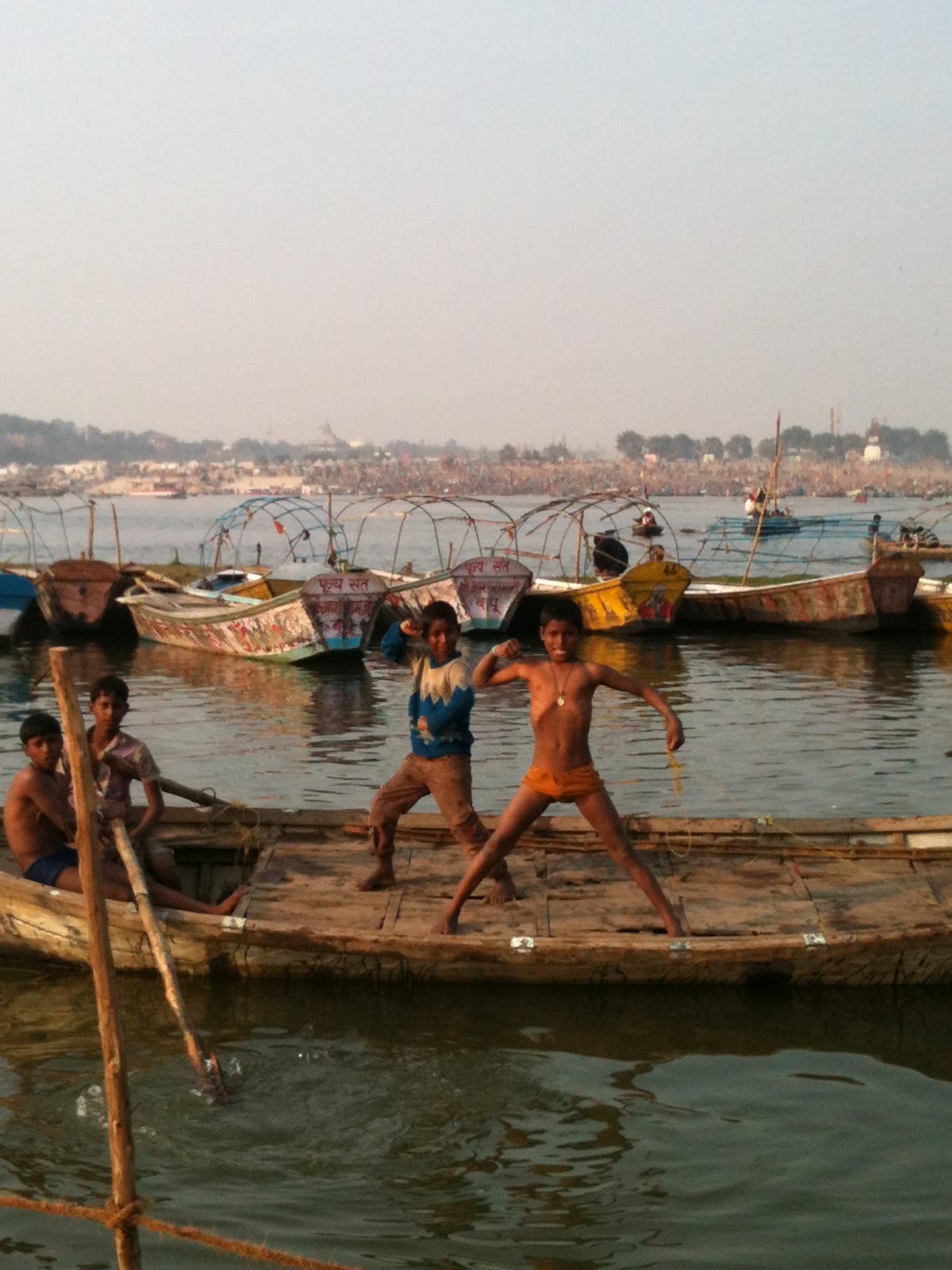
Children posing
Kumbh Mela is one of the most ancient and largest festivals on earth.

Basically, Kumbh Mela is a mass Hindu pilgrimage in which believers gather to bathe in a river considered sacred.
It takes place every third year at one of the following four places by rotation: Haridwar, Allahabad, Nasik and Ujjain. Kumbh Mela is so held at each of them every twelfth year.

The sacred rivers are: the Ganges (Haridwar), the confluence of the Ganges, the Yamuna and the Saraswati (Allahabad), the Godawari (Nasik) and the Shipra (Ujjain).
In Hindi Kumbh means pitcher and Mela means fair - meaning gathering, exhibition.

The gathering is held for about one and a half month at each of these four places where it is believed that drops of nectar fell from the Kumbh carried by gods after the sea was churned.

Sadhus - literally good man and also referred to as babas - are the highlight of the festival. The author G. Flood defines them as Hindu mystic men who chose to live a life apart from or on the edges of society in order to focus on their own spiritual practice. 

The sadhu dedicates his life to achieve liberation (moksa) through meditation and contemplation.

Among the sadhus, the naga babas (the naked ones) enjoy particular prestige and are normally granted an advantageous position near the rivers.

Blessed by babas

Maha Kumbh Mela 2013

The 2013 festival was a Maha Kumbh Mela (Great Kumbh Mela) which is celebrated each 144 years only in Allahabad.

The whole gathering spread over an area of many kilometers full of shelters and camps for people to sleep, pray and meditate.

Journalists, photographers and travelers from abroad joined Indian babas, pilgrims, spectators, vendors and beggars in the celebration of the event.

According to the Hindu Times, the main bathing day - 10 February - was likely the largest gathering on a single day in the history of humanity. 30 million people were estimated on this day whereas 100 million were expected during the whole festival between January and March.


My experience

Going straight to Kumbh Mela as soon as arrived in India was a mind-blowing experience.

In the week there – from 8 to 16 February – I could see the parade, talk with babas, hear legends about them and see some of the crazy things they can do with their mind and body.

An example of a legend about babas is on their age. Some sadhus are said to be centuries old.

Babas smoking Chilum Pipes
This is possible because – according to hindu tradition - each of us is born with a certain amount of breaths. Through meditation they can slow down the respiration's pace and breath only once each few hours or days and so use less breaths and live much longer.

At Kumbh Mela you can see babas proudly showing their mind power. Through a hard mind work they can endure extreme physical pain. So they can for example pierce their genitals with a pole on which two men stand. Or others can remain a long time completely wrapped in thorns.

Most of them sat aside a fire while sipping chai and smoking marijuana. Using marijuana is a form of worship of Shiva who was believed to have an adoration for the leaves of this plant.

Some sadhus I encountered – contrary to what I had expected – are eccentric men with a big ego.

Some of them are treated as kings by their disciples and they like to attract attention through strange rituals or clothing and enjoy being photographed.


[To be continued in the next post...]


Versione Italiana

Man watching the fair
Cos'e' il Kumbh Mela?

Kumbh Mela e' il festival degli dei.

Kumbh Mela e' uno dei festival piu' antichi e grandi della terra.

In pratica, il Kumbh Mela e' un pellegrinaggio Hindu tramite il quale i credenti si radunano per fare il bagno in un fiume considerato sacro.

Questo festival ha luogo una volta ogni terzo anno a rotazione in uno dei seguenti posti: Hardiwar, Allahabad, Nasik e Ujjain. Quindi il Kumbh Mela viene tenuuto in ognuna di queste localita' ogni dodici anni.

I sacri fiumi sono: il Gange (Haridwar), la confluenza tra il Gange, lo Yamuna e il Saraswati (Allahabad), il Godawari (Nasik) e il Shipra (Ujjain).

In Hindi, Kumbh significa brocca e Mela significa fiera.

Il raduno dura circa un mese e mezzo in questi luoghi dove si crede che delle gocce di nettare siano cadute dal Kumbh trasportato dagli dei dopo il mescolamento del mare.

Crowd bathing
I sadhus – letteralmente uomini buoni e comunemente chiamati anche babas – sono il centro dell'attenzione durante festival. L'autore G. Flood li definisce uomini mistici Hindu che hanno scelto di vivere una vita lontano o ai margini della societa' in modo da potersi concentrare sulla propria pratica spirituale. Il Sadhu e' colui che dedica la propria vita al raggiungimento della liberazione (moksa) attraverso la meditazione e la contemplazione.

Tra i sadhus, i cosidetti naga babas (i babas nudi) godono di particolare prestigio e viene loro garantito una posizione vantaggiosa vicino ai fiumi.


Maha Kumbh Mela 2013

Hindu devoted
Il festival del 2013 e' stato un Maha Kumbh Mela (Grande Kumbh Mela) il quale viene celebrato ogni 144 anni solamente ad Allahabad.

L'intera area del raduno era di diversi kilometri ed era caratterizzata da rifugi e campeggi per pregare, meditare e dormire.

Giornalisti, fotografi e viaggitori stranieri si sono uniti ai babas, pellegrini, spettatori, venditori e mendicanti indiani nella celebrazione dell'evento.

Secondo l'Hindu Times, il giorno principale – il 10 febbraio – e' stato probabilmente il piu' grande raduno di persone in un singolo giorno nella storia. Si stimano 30 millioni di persone solo in quel giorno e circa 100 milioni durante tutto il periodo - tra gennaio e marzo.


La mia Esperienza

Andare direttamente al Kumbh Mela, appena arrivato in India, e' stata un'esperienza allucinante.
Durante la settimana trascorsa li' - dall' 8 al 16 Febbrario – ho potuto vedere la parata, parlare con i babas, ascoltare leggende su di loro e vedere alcune delle cose pazze che possono fare con la loro mente ed il loro corpo.

Baba piercing his genitals
Un esempio di leggenda sui babas riguarda la loro eta'. Si dice che alcuni di loro abbiano diversi secoli di eta'. Questo e' possible poiche' – secondo la tradizione hindu – quando ognuno di noi viene al mondo riceve un certo numero di respiri. Attraverso la meditazione i babas possono rallentare il loro respiro e respirare una volta ogni qualche ora o addirittura giorno e quindi usare meno respiri e vivere piu' a lungo.

Al Kumbh Mela si possono anche vedere babas che mostrano orgogliosamente i poteri della loro mente. Attraverso un duro lavoro con la mente possono sopportare dolore fisico estremo. Quindi possono per esempio infilzarsi i genitali con un'asta sulla quale altri due uomini stanno in piedi. O altri possono rimanere a lungo arrotolati nelle spine.

La maggioranza di loro stava seduta di fianco al fuoco mentre sorseggiando te e fumavando marijuana. Usare marijuana e' una forma di venerazione di Shiva, la quale si crede abbia una passione per le foglie di questa pianta.
Alcuni sadhus incontrati – contrariamente a quanto mi aspettavo – sono persone eccentriche con un ego enorme. Alcuni di loro sono trattati come re dai loro discepoli e a cui piace attirare l'attenzione attraverso rituali strani ed essere fotografati.


[Continua nel prossimo post...]


Video of Naga Babas when they left their camp to reach the sacred river